
Alanine Aminotransferase (ALT): What It Reveals About Liver Health and Metabolic Stress
At Ultimate Functional Medicine, we believe healing isn’t about chasing symptoms—it’s about creating deep, lasting transformation. These are the three pillars that guide everything we do.
Alanine Aminotransferase (ALT): What It Reveals About Liver Health and Metabolic Stress
When it comes to evaluating liver health, one of the most important and commonly tested markers is Alanine Aminotransferase (ALT). While often viewed simply as a “liver enzyme,” ALT provides deeper insight into liver cell integrity, metabolic stress, and overall health.
If your ALT levels are elevated or even trending upward, it may be an early sign that your body is under stress long before more serious conditions develop.
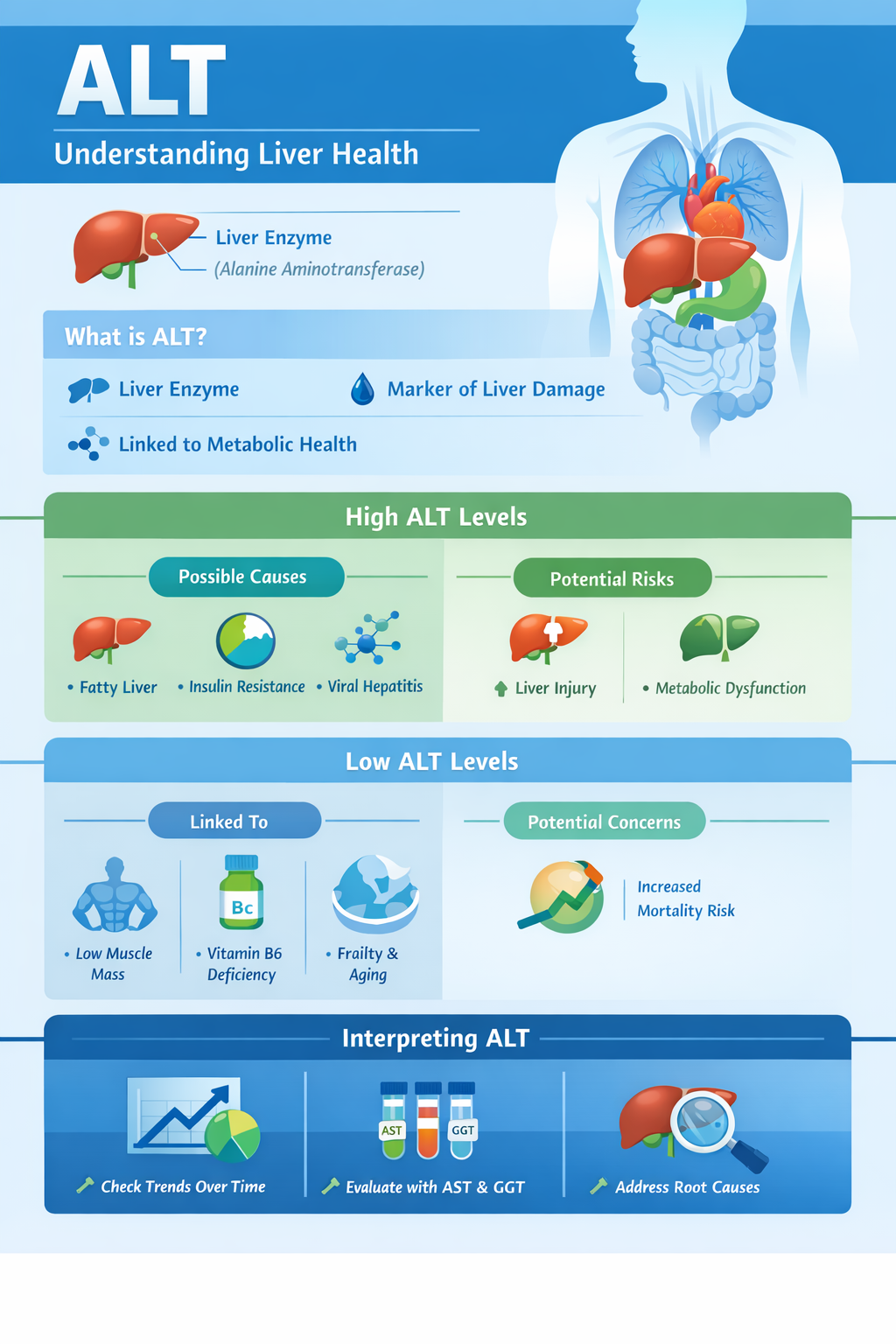
🧬 What is ALT?
Alanine Aminotransferase (ALT) is an enzyme found primarily inside liver cells (hepatocytes). It plays a key role in amino acid metabolism, specifically helping convert alanine into pyruvate, which the body uses for energy production.
Under normal conditions, ALT stays inside liver cells, and only small amounts circulate in the bloodstream. However, when liver cells become damaged or stressed, ALT leaks into the blood, making it a sensitive marker of liver injury.
Although ALT is most concentrated in the liver, smaller amounts are also found in:
Kidneys
Heart
Skeletal muscle
🧪 Why Test ALT?
ALT is commonly included in routine blood work and is a key marker used to assess:
Liver function and integrity
Metabolic health
Inflammation or cellular stress
Healthcare providers often evaluate ALT when investigating the following:
Suspected liver inflammation or injury
Fatty liver disease (NAFLD / MAFLD)
Alcohol-related liver stress
Medication or supplement-induced liver strain
Viral infections such as hepatitis
Insulin resistance and metabolic dysfunction
Unexplained fatigue or low energy
ALT is typically interpreted alongside other markers such as AST, GGT, and metabolic labs to get a more complete picture.
📊 What Do ALT Levels Mean?
🔺 High ALT Levels
ALT levels above approximately 35–45 U/L (depending on the lab) may indicate liver stress or damage.
Common causes of elevated ALT include:
Fatty liver disease (very common)
Insulin resistance or metabolic syndrome
Alcohol consumption
Medications or supplements
Viral infections
Environmental toxin exposure
Mild elevations are often linked to metabolic dysfunction, even before a formal diagnosis is made. This is why ALT can be an early warning sign.
More significant elevations may suggest:
Acute liver injury
Hepatitis
Advanced liver disease
👉 Key Insight:
A metabolic imbalance may be the cause of even slightly elevated ALT levels, so they shouldn't be disregarded.
🔻 Low ALT Levels
Low ALT levels (typically below ~10 U/L) are often overlooked but can also provide useful insight.
Possible associations include:
Low metabolic activity
Reduced muscle mass
Vitamin B6 deficiency
Aging-related changes
Emerging research suggests that very low ALT levels may be linked to:
Frailty
Sarcopenia (muscle loss)
Malnutrition
Increased mortality risk in certain populations
👉 While not typically a primary concern, persistently low ALT may reflect reduced physiological resilience, especially in older adults.
🔍 Functional Medicine Perspective: Don’t Look at ALT Alone
One of the most important principles in functional medicine is this:
No lab marker should be interpreted in isolation.
ALT is most meaningful when evaluated alongside:
AST (Aspartate Aminotransferase)
GGT (Gamma-Glutamyl Transferase)
Fasting insulin
Lipid panel (cholesterol, triglycerides)
This combination helps determine whether elevated ALT is due to:
Metabolic dysfunction
Liver inflammation
Toxin exposure
Or more advanced liver disease
📈 Why Trends Matter More Than a Single Test
A single ALT result gives you a snapshot, but trends over time tell the real story.
A gradual increase may signal worsening metabolic health
Stable or decreasing levels often reflect improvement with lifestyle changes
Tracking ALT over time can help you catch issues early before more serious conditions develop.
🧬 Root Causes of Elevated ALT
Rather than just treating the number, functional medicine focuses on identifying why ALT is elevated.
Common root drivers include:
Poor diet (high sugar, processed foods)
Insulin resistance
Excess body fat (especially abdominal fat)
Chronic inflammation
Alcohol intake
Medication or toxin exposure
Sedentary lifestyle
🥗 How to Support Healthy ALT Levels
The good news is that ALT is highly responsive to lifestyle changes.
Key strategies include:
🥑 Improve Nutrition
Focus on whole, anti-inflammatory foods
Reduce sugar and processed carbohydrates
Increase fiber and healthy fats
🏃♂️ Support Metabolic Health
Improve insulin sensitivity through exercise
Maintain a healthy weight
🍷 Reduce Liver Stress
Limit alcohol intake
Be mindful of medications and supplements
🌿 Support Detox Pathways
Stay hydrated
Support gut health
Consider targeted liver support under guidance
🛡️ Final Thoughts
ALT is more than just a liver enzyme; it’s a powerful indicator of metabolic health, inflammation, and overall physiological stress.
Even mild elevations can signal early dysfunction, making ALT an important marker for prevention, not just diagnosis.
By addressing the root causes and supporting your body through nutrition, lifestyle, and targeted care, you can improve liver function and optimize long-term health.
💬 Ready to Take a Deeper Look at Your Labs?
At Ultimate Functional Medicine, we go beyond standard lab ranges to uncover the root cause of your symptoms.
Book your consultation today and take control of your metabolic and liver health.
Join a New Model of Medicine
We created Ultimate Functional Medicine because we believe you deserve more than symptom suppression.
You deserve answers.
You deserve clarity.
You deserve a care team that treats you like a whole person—not just a case file.
If you’re tired of feeling dismissed or stuck...
If you’re ready to get to the root of what’s going on...
If you want a personalized, empowering path to healing...
Then we invite you to step into this new model of medicine with us.
This isn’t alternative. It’s advanced.
It’s not fringe—it’s foundational.
And it just might be the approach you’ve been looking for all along.
📞 Ready to get started?
Book your Root Cause Discovery Call and let’s explore how these three pillars can support your healing journey.
