
Epstein-Barr Virus (EBV): Understanding Chronic Fatigue, Immune Health, and Viral Reactivation
At Ultimate Functional Medicine, we believe healing isn’t about chasing symptoms—it’s about creating deep, lasting transformation. These are the three pillars that guide everything we do.
Epstein-Barr Virus (EBV): Understanding Chronic Fatigue, Immune Health, and Viral Reactivation
What Is Epstein-Barr Virus (EBV)?
Epstein-Barr Virus, commonly known as EBV, is a highly prevalent virus belonging to the herpesvirus family (Human Herpesvirus 4 or HHV-4). It is best known for causing infectious mononucleosis, often referred to as “mono,” but its effects can extend far beyond the initial infection.
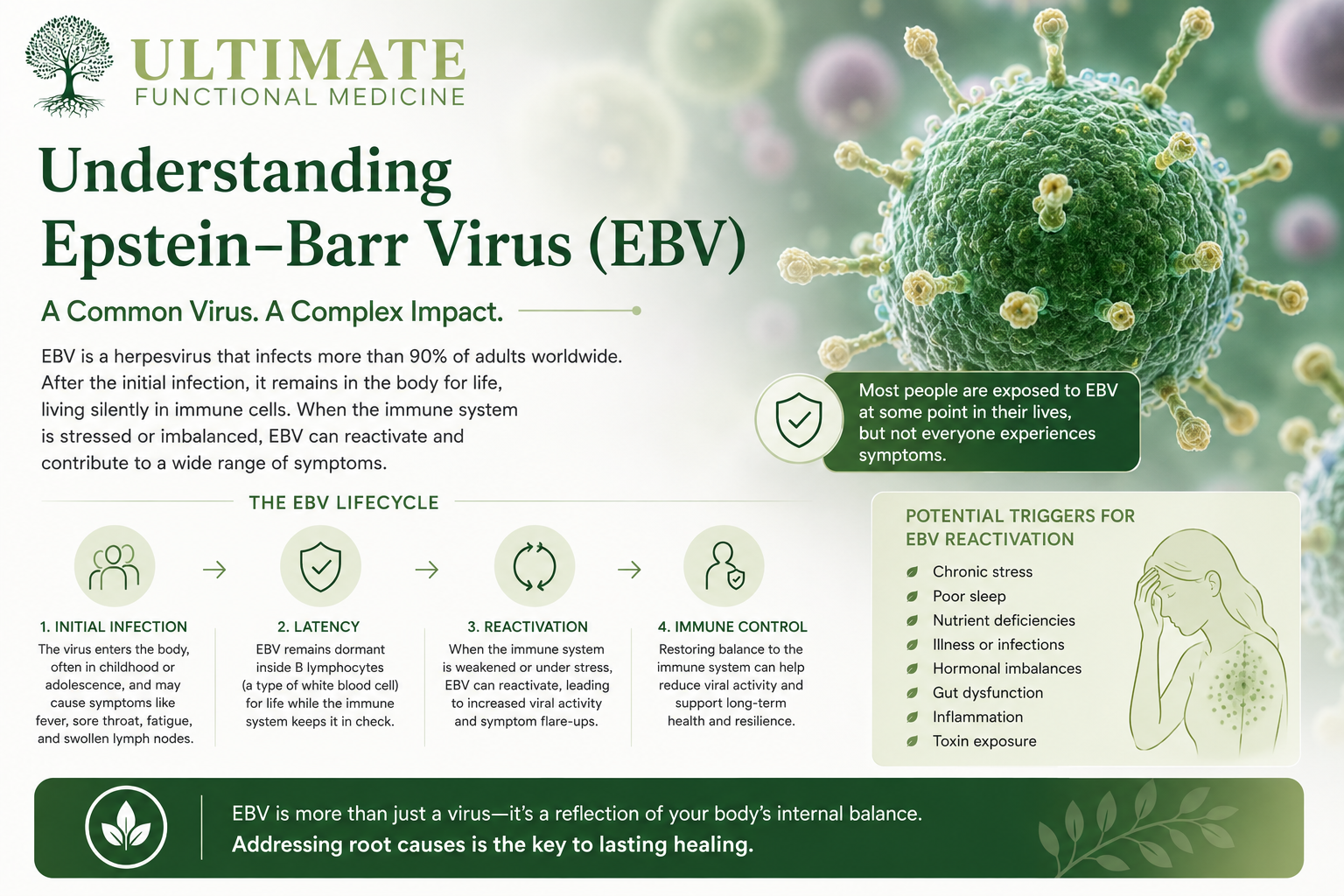
EBV is one of the most common viruses worldwide, with most adults having been exposed at some point in their lives. After the initial infection, the virus does not fully leave the body. Instead, it remains dormant within immune cells called B lymphocytes, where it can stay inactive for years or even decades.
In healthy individuals, the immune system typically keeps EBV under control. However, during periods of chronic stress, poor sleep, inflammation, immune dysfunction, nutrient deficiencies, hormone imbalances, or ongoing illness, the virus may reactivate. When this occurs, it can contribute to persistent symptoms and ongoing health concerns.
Common Symptoms Associated With EBV
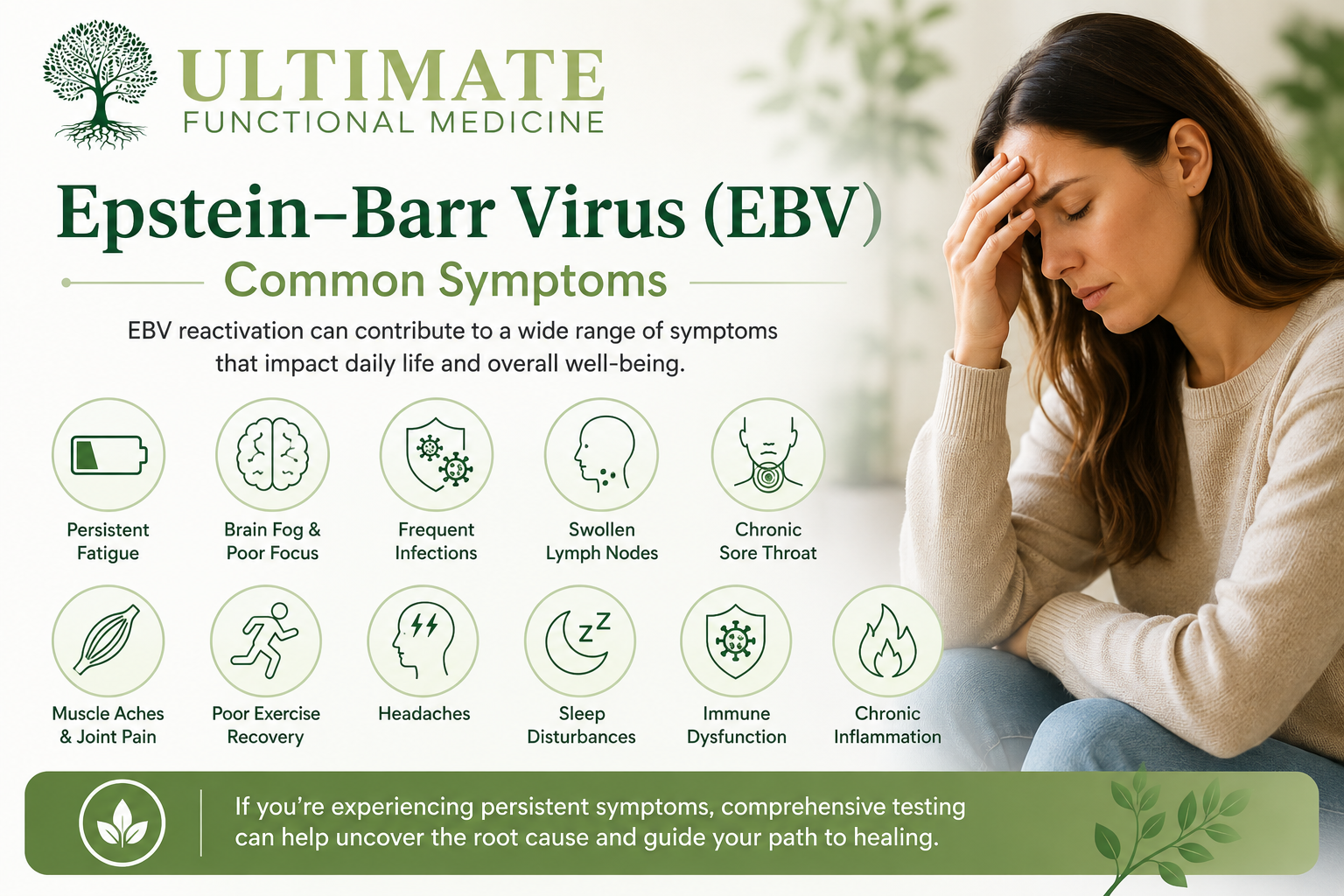
While some people recover fully after their initial infection, others may continue to experience lingering symptoms. EBV reactivation has been associated with a wide range of chronic complaints, including:
Persistent fatigue or low energy
Brain fog and difficulty concentrating
Frequent infections
Swollen lymph nodes
Chronic sore throat
Muscle aches and joint pain
Poor exercise recovery
Headaches
Sleep disturbances
Immune dysfunction
Chronic inflammation
Many patients dealing with chronic fatigue syndrome, autoimmune conditions, or post-viral symptoms may benefit from evaluating EBV antibody patterns as part of a comprehensive functional medicine approach.
Why Test for Epstein-Barr Virus?
Testing for EBV can provide valuable insight into immune system activity and help determine whether symptoms may be linked to a recent infection, past exposure, or viral reactivation.
At Ultimate Functional Medicine, EBV testing is often considered for patients experiencing:
Chronic fatigue
Brain fog or memory issues
Recurrent illness
Autoimmune symptoms
Unexplained inflammation
Difficulty recovering from stress or illness
Persistent swollen lymph nodes
Long-standing post-viral symptoms
Unlike a simple positive or negative test, EBV is typically evaluated through a panel of antibodies that help identify the stage and activity of the virus.
Understanding EBV Antibody Testing
Acute or Recent Infection
An acute EBV infection often shows elevated Viral Capsid Antigen (VCA) IgM and VCA IgG antibodies, while Epstein-Barr Nuclear Antigen (EBNA) IgG may still be negative early on.
This pattern suggests a recent infection with active viral replication. Symptoms commonly include:
Severe fatigue
Fever
Sore throat
Swollen lymph nodes
Body aches
Past Infection or Latent Phase
Most adults show evidence of past EBV exposure. In this stage, VCA IgG and EBNA IgG are positive, while VCA IgM remains negative.
This pattern indicates prior exposure with the virus remaining dormant in the body. Many individuals in this phase experience no symptoms at all.
EBV Reactivation
EBV reactivation may occur when the immune system becomes overwhelmed or dysregulated. A common marker associated with reactivation is elevated Early Antigen (EA) IgG alongside positive VCA IgG and EBNA IgG.
Reactivation patterns are frequently associated with:
Chronic fatigue
Immune dysfunction
Increased inflammation
Stress intolerance
Poor recovery after illness
Persistent neurological or cognitive symptoms
Functional Medicine Perspective on EBV
In functional medicine, EBV is rarely viewed as an isolated issue. Viral reactivation often reflects deeper underlying imbalances within the body.
Factors that may contribute to immune dysfunction and EBV reactivation include:
Chronic stress
Poor sleep quality
Nutrient deficiencies
Gut dysfunction and leaky gut
Hormonal imbalances
Blood sugar dysregulation
Chronic inflammation
Mold exposure or environmental toxins
Rather than simply focusing on the virus itself, a functional medicine approach aims to identify and address the root causes that may be weakening immune resilience.
Supporting the body through nutrition, stress management, sleep optimization, gut healing, hormone balance, and targeted supplementation may help improve immune function and reduce symptom burden over time.
What Do EBV Test Results Mean?
EBV testing is interpreted based on antibody patterns rather than traditional “optimal ranges.”
Common EBV Markers
VCA IgM: Usually negative in healthy individuals. Positive levels may indicate an acute infection.
VCA IgG: Indicates current or past exposure to EBV.
EBNA IgG: Suggests established past infection and viral latency.
Early Antigen (EA) IgG: Typically negative. Elevated levels may suggest viral reactivation.
Laboratory reference ranges can vary, and results should always be interpreted alongside symptoms, medical history, and additional lab findings.
Comprehensive Testing Matters
Because EBV reactivation is often connected to broader immune and metabolic imbalances, additional testing may be recommended to gain a more complete picture of health.
This may include evaluating:
Inflammatory markers
Thyroid function
Hormone balance
Nutrient deficiencies
Gut health
Immune markers
Cortisol and adrenal function
Metabolic health
Tracking EBV antibody levels over time may also help monitor immune recovery and treatment progress.
Supporting Recovery From EBV Reactivation
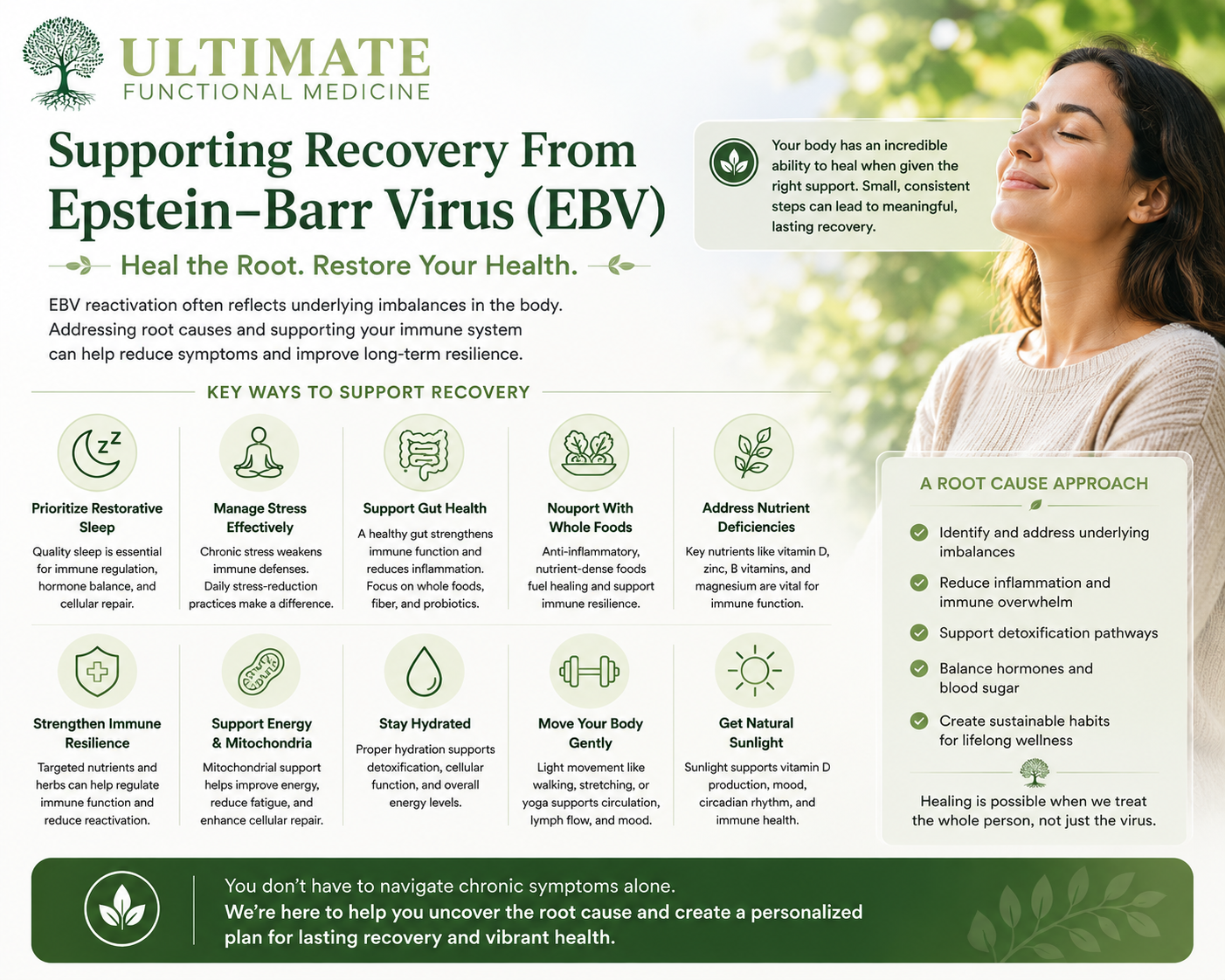
Healing from EBV-related symptoms often requires a comprehensive and personalized approach. Strategies may include:
Prioritizing restorative sleep
Reducing chronic stress
Supporting gut health
Optimizing nutrition
Correcting vitamin and mineral deficiencies
Balancing hormones
Managing inflammation
Supporting mitochondrial function and energy production
Every patient is unique, and identifying the underlying contributors to immune dysfunction is essential for long-term recovery.
Looking for Answers to Chronic Fatigue and Immune Symptoms?
If you are struggling with persistent fatigue, brain fog, chronic inflammation, or unexplained symptoms, comprehensive functional medicine testing may help uncover hidden contributors such as EBV reactivation.
At Ultimate Functional Medicine, we take a root-cause approach to health by evaluating the interconnected systems that influence immune function, energy production, and overall wellness.
Join a New Model of Medicine
We created Ultimate Functional Medicine because we believe you deserve more than symptom suppression.
You deserve answers.
You deserve clarity.
You deserve a care team that treats you like a whole person—not just a case file.
If you’re tired of feeling dismissed or stuck...
If you’re ready to get to the root of what’s going on...
If you want a personalized, empowering path to healing...
Then we invite you to step into this new model of medicine with us.
This isn’t alternative. It’s advanced.
It’s not fringe—it’s foundational.
And it just might be the approach you’ve been looking for all along.
📞 Ready to get started?
Book your Root Cause Discovery Call and let’s explore how these three pillars can support your healing journey.
