PMDD as a Neuroendocrine Sensitivity Disorder
At Ultimate Functional Medicine, we believe healing isn’t about chasing symptoms—it’s about creating deep, lasting transformation. These are the three pillars that guide everything we do.
PMDD as a Neuroendocrine Sensitivity Disorder
Understanding the Hormonal, Neurotransmitter, and Stress Connections Behind Premenstrual Dysphoric Disorder
Premenstrual Dysphoric Disorder (PMDD) is far more than “severe PMS.” It is now increasingly understood as a complex neuroendocrine sensitivity disorder in which the brain and nervous system respond abnormally to normal hormonal fluctuations throughout the menstrual cycle.
Rather than being caused by excessively high or low hormone levels, PMDD appears to result from heightened sensitivity to the natural rise and fall of estrogen and progesterone. These hormonal shifts can significantly affect neurotransmitters, stress hormones, inflammation, mood regulation, and cognitive function.
For many women, PMDD symptoms can be emotionally overwhelming and physically debilitating, often interfering with relationships, work performance, sleep, and quality of life. A functional and systems-based approach may help uncover the deeper physiological contributors involved in PMDD and guide more personalized treatment strategies.
What Is PMDD?
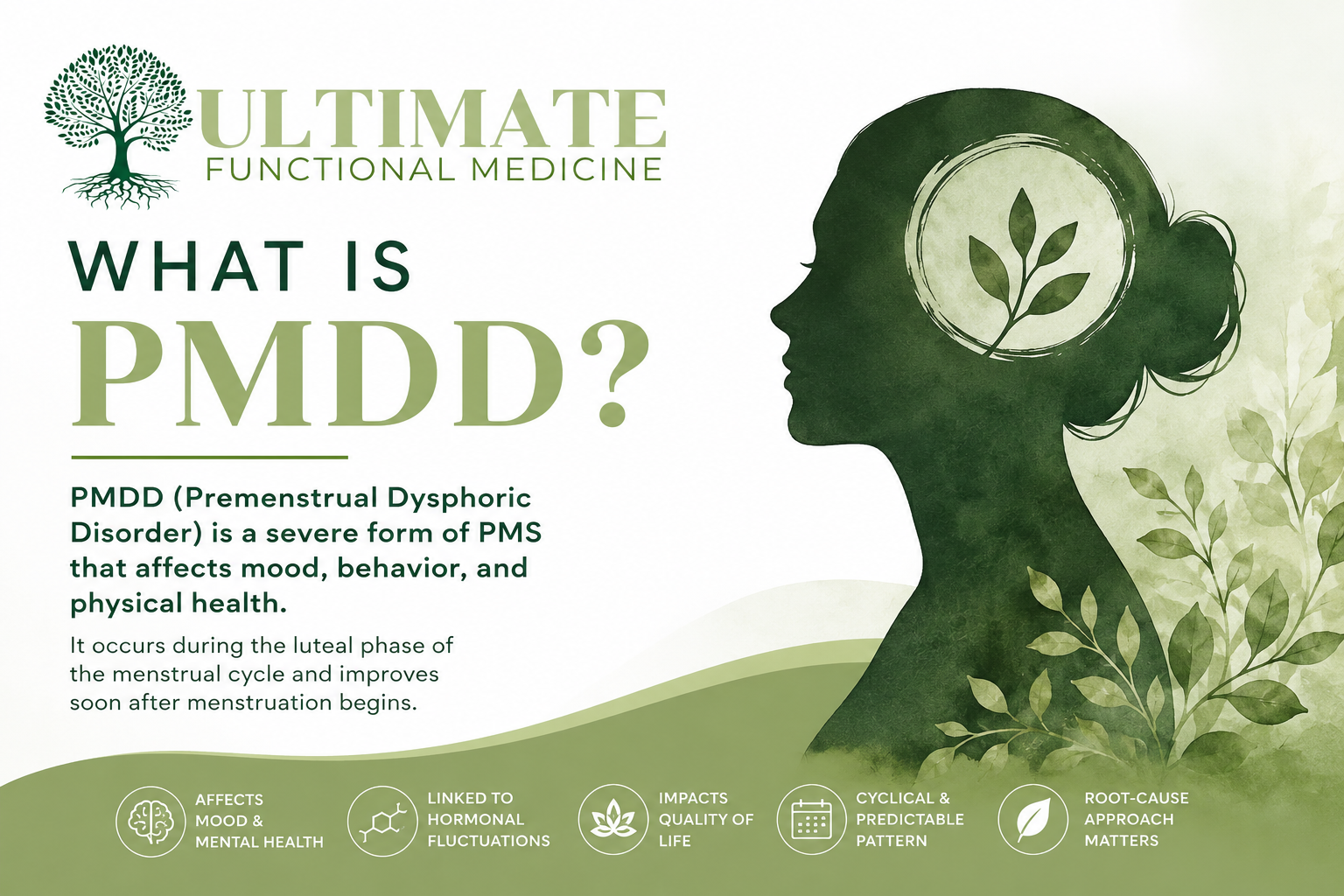
PMDD is a severe cyclical mood disorder that occurs during the luteal phase of the menstrual cycle, typically beginning 1–2 weeks before menstruation and improving shortly after the start of a period.
Common PMDD symptoms may include:
Severe mood swings
Anxiety or panic
Irritability or anger
Depression or hopelessness
Fatigue
Brain fog and difficulty concentrating
Sleep disturbances
Food cravings
Bloating and headaches
Increased emotional sensitivity
Unlike generalized anxiety or depression, PMDD symptoms follow a predictable hormonal pattern and often resolve rapidly once menstruation begins.
PMDD and Hormonal Sensitivity
Estrogen and progesterone naturally fluctuate throughout the menstrual cycle. In women with PMDD, the nervous system appears unusually sensitive to these hormonal changes, particularly during the late luteal phase when hormone levels begin to decline.
Research suggests that it is the change in hormone levels, rather than the hormone levels themselves, that triggers symptoms.
This distinction is important because many women with PMDD may have completely “normal” hormone lab results while still experiencing severe symptoms.
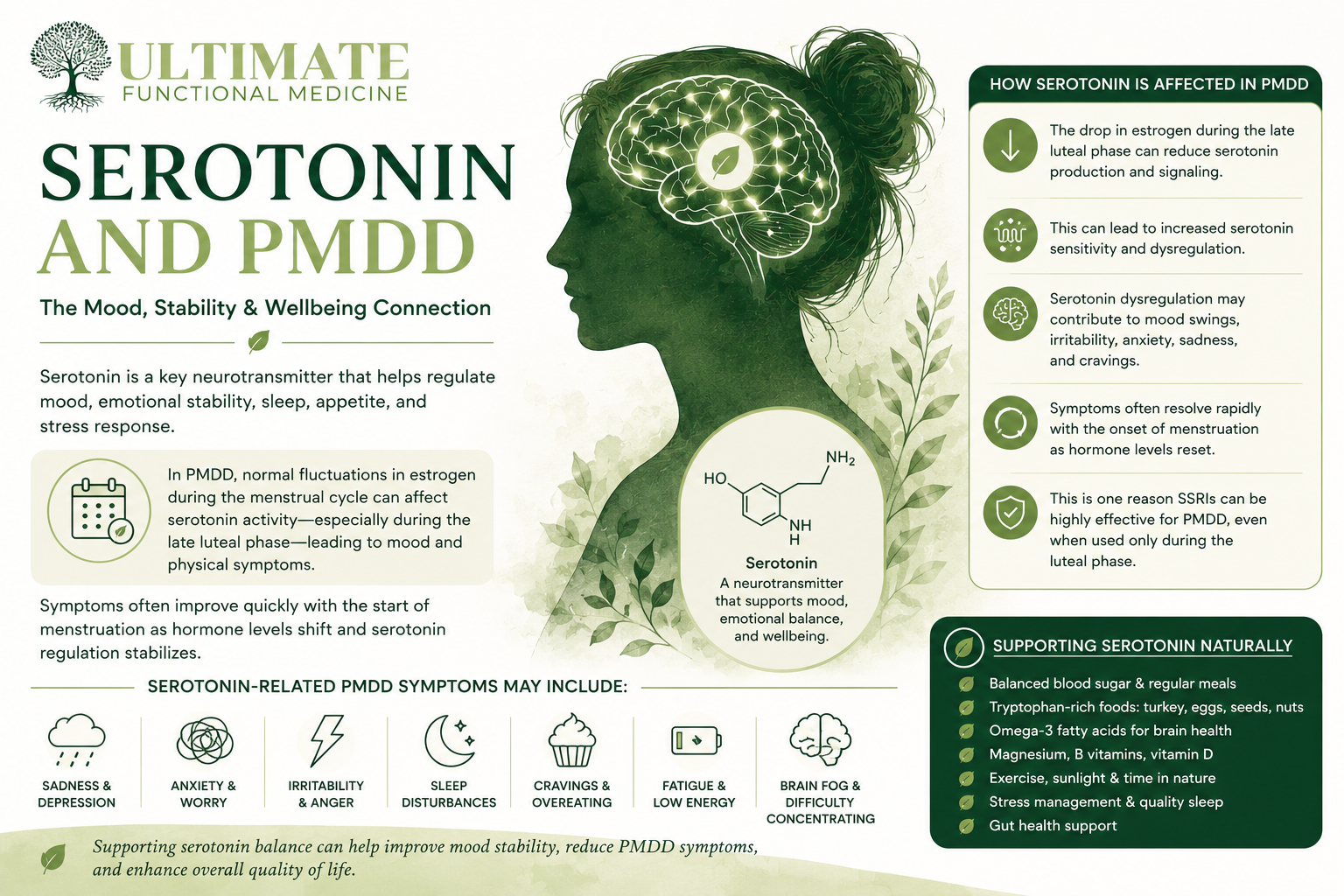
The Estrogen and Serotonin Connection
Estrogen plays a major role in regulating serotonin, one of the brain’s most important neurotransmitters for mood, emotional stability, sleep, and wellbeing.
Estrogen helps influence:
Serotonin production
Serotonin receptor activity
Serotonin transport and reuptake
Emotional resilience and stress tolerance
When estrogen declines during the late luteal phase, serotonin activity may also shift. In women with PMDD, this change may trigger significant mood instability, sadness, irritability, and emotional dysregulation.
This mechanism may help explain why selective serotonin reuptake inhibitors (SSRIs) are often effective for PMDD, even when used only during the luteal phase.
Progesterone, Allopregnanolone, and GABA Dysfunction
Progesterone also has important effects on the brain and nervous system. One of its key metabolites, allopregnanolone (ALLO), interacts with GABA-A receptors, which help calm the nervous system and regulate anxiety.
GABA is the brain’s primary inhibitory neurotransmitter and plays a major role in:
Relaxation
Stress resilience
Emotional stability
Sleep quality
Nervous system regulation
In PMDD, researchers believe there may be an abnormal or exaggerated response to allopregnanolone. Instead of creating a calming effect, fluctuating ALLO levels may contribute to:
Anxiety
Irritability
Panic symptoms
Emotional overwhelm
Increased stress reactivity
As progesterone and ALLO decline before menstruation, some women may experience what researchers describe as a “GABAergic withdrawal” response, leading to nervous system destabilization and worsening mood symptoms.
Stress, Inflammation, and the HPA Axis
Emerging research suggests that chronic stress and neuroinflammation may play a major role in PMDD.
Hormonal changes interact closely with the hypothalamic-pituitary-adrenal (HPA) axis, the body’s central stress response system. Dysregulation of this system may amplify sensitivity to hormonal fluctuations and worsen emotional symptoms.
Women with PMDD may experience altered cortisol patterns, including:
Elevated cortisol levels
Blunted cortisol responses
Poor stress adaptation
Increased inflammatory signaling
Inflammation may further affect neurotransmitter pathways involving serotonin, GABA, dopamine, and the kynurenine pathway, creating a cycle of mood instability and nervous system dysregulation.
Beyond Serotonin: The Neurotransmitter Network in PMDD
Although serotonin is often the primary focus in conventional treatment approaches, PMDD likely involves multiple interconnected neurotransmitter systems.
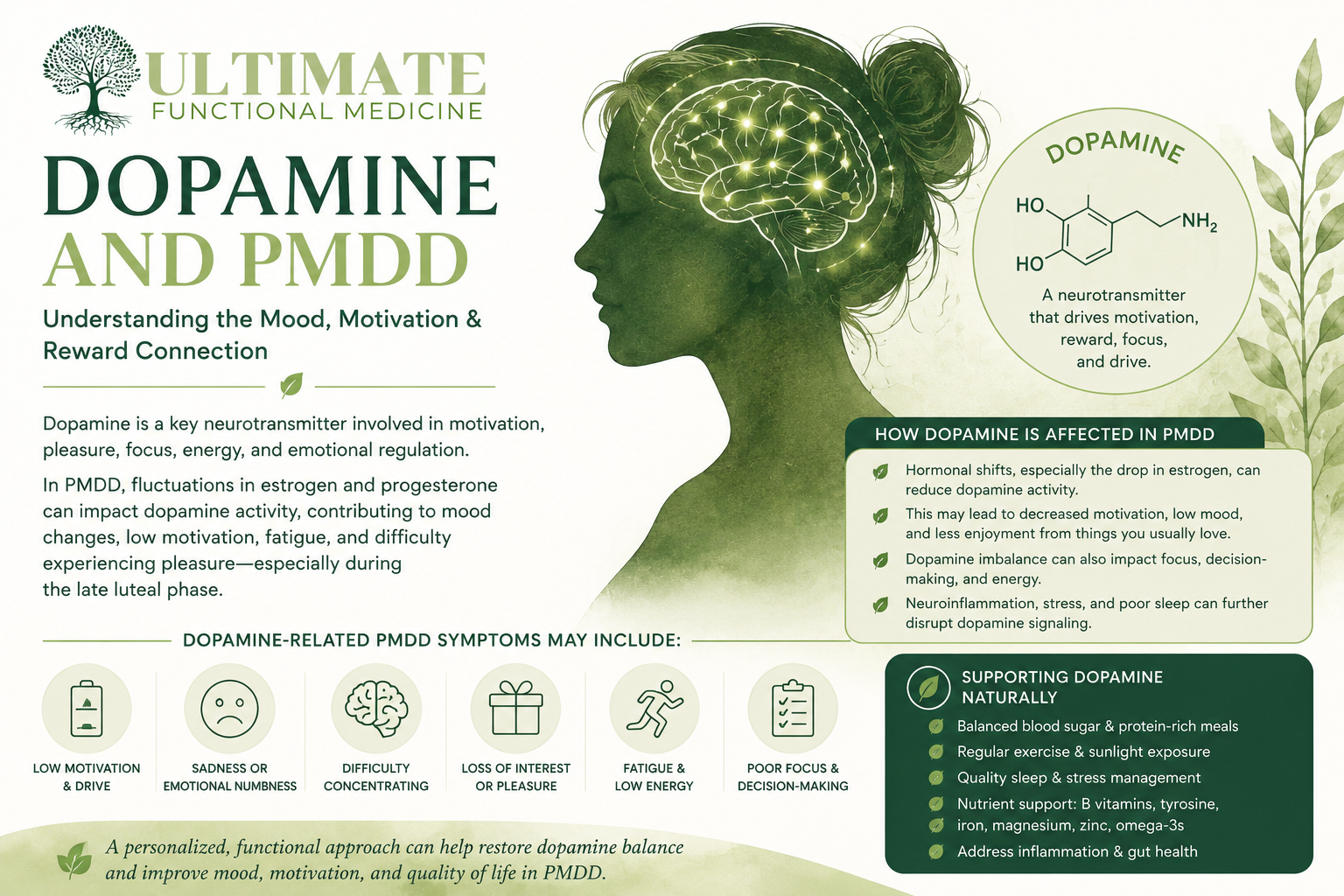
Dopamine
Dopamine influences:
Motivation
Reward processing
Focus
Executive function
Energy levels
Low dopamine activity may contribute to fatigue, low motivation, emotional numbness, and difficulty concentrating.
GABA
GABA plays a central role in calming the nervous system and regulating anxiety. Impaired GABA signaling may increase emotional reactivity and stress sensitivity.
Acetylcholine
Acetylcholine supports:
Memory
Attention
Cognitive performance
Mental clarity
Disruptions in cholinergic signaling may contribute to brain fog, fatigue, and cognitive symptoms commonly reported in PMDD.
These neurotransmitter systems do not function independently. They are continuously influenced by hormonal fluctuations, stress physiology, inflammation, sleep quality, nutrition, and overall metabolic health.
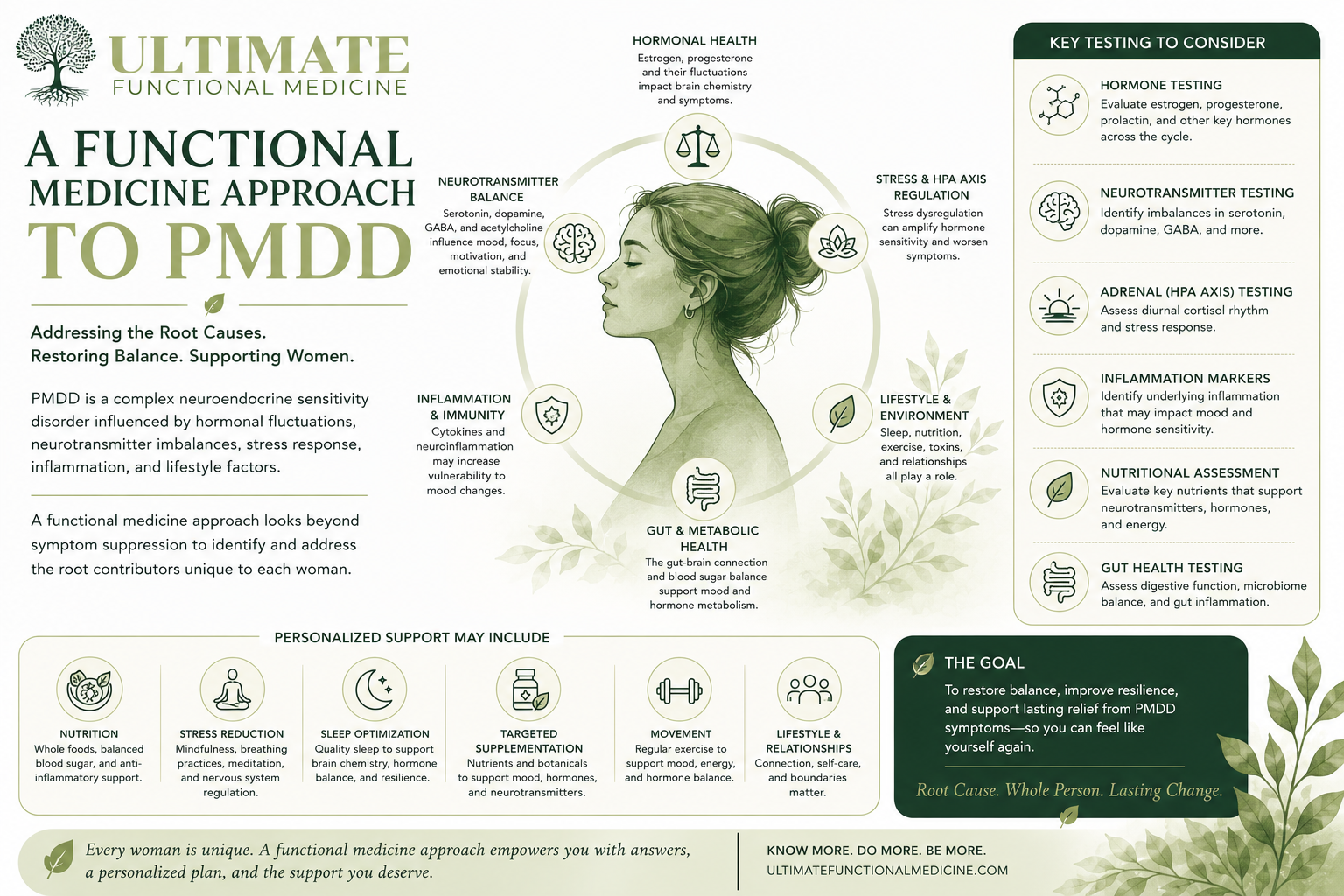
A Functional Medicine Approach to PMDD
A functional medicine perspective looks beyond symptom suppression to identify underlying physiological imbalances contributing to PMDD symptoms.
Comprehensive testing may help evaluate:
Hormone patterns and cycling
Cortisol rhythm and HPA axis function
Neurotransmitter balance
Inflammatory markers
Nutrient deficiencies
Blood sugar regulation
Gut health and the microbiome
Detoxification pathways
Personalized treatment approaches may include:
Nutrition and blood sugar stabilization
Stress reduction strategies
Nervous system regulation
Sleep optimization
Targeted supplementation
Lifestyle modification
Hormonal support when appropriate
The Importance of Personalized Care
PMDD is a real and biologically complex condition. Women experiencing severe cyclical mood symptoms are not simply “overreacting” or emotionally weak. Their nervous systems may be responding differently to otherwise normal hormonal changes.
Understanding PMDD through a neuroendocrine and systems-based lens opens the door to more personalized and effective treatment strategies that address the root contributors involved.
With the right testing, support, and individualized care plan, many women can experience significant improvement in mood stability, energy, cognitive function, and overall quality of life.
Join a New Model of Medicine
We created Ultimate Functional Medicine because we believe you deserve more than symptom suppression.
You deserve answers.
You deserve clarity.
You deserve a care team that treats you like a whole person—not just a case file.
If you’re tired of feeling dismissed or stuck...
If you’re ready to get to the root of what’s going on...
If you want a personalized, empowering path to healing...
Then we invite you to step into this new model of medicine with us.
This isn’t alternative. It’s advanced.
It’s not fringe—it’s foundational.
And it just might be the approach you’ve been looking for all along.
📞 Ready to get started?
Book your Root Cause Discovery Call and let’s explore how these three pillars can support your healing journey.
