Small Dense LDL (sdLDL): A Deeper Look at Cardiovascular Risk
At Ultimate Functional Medicine, we believe healing isn’t about chasing symptoms—it’s about creating deep, lasting transformation. These are the three pillars that guide everything we do.
What is Small Dense LDL (sdLDL)?
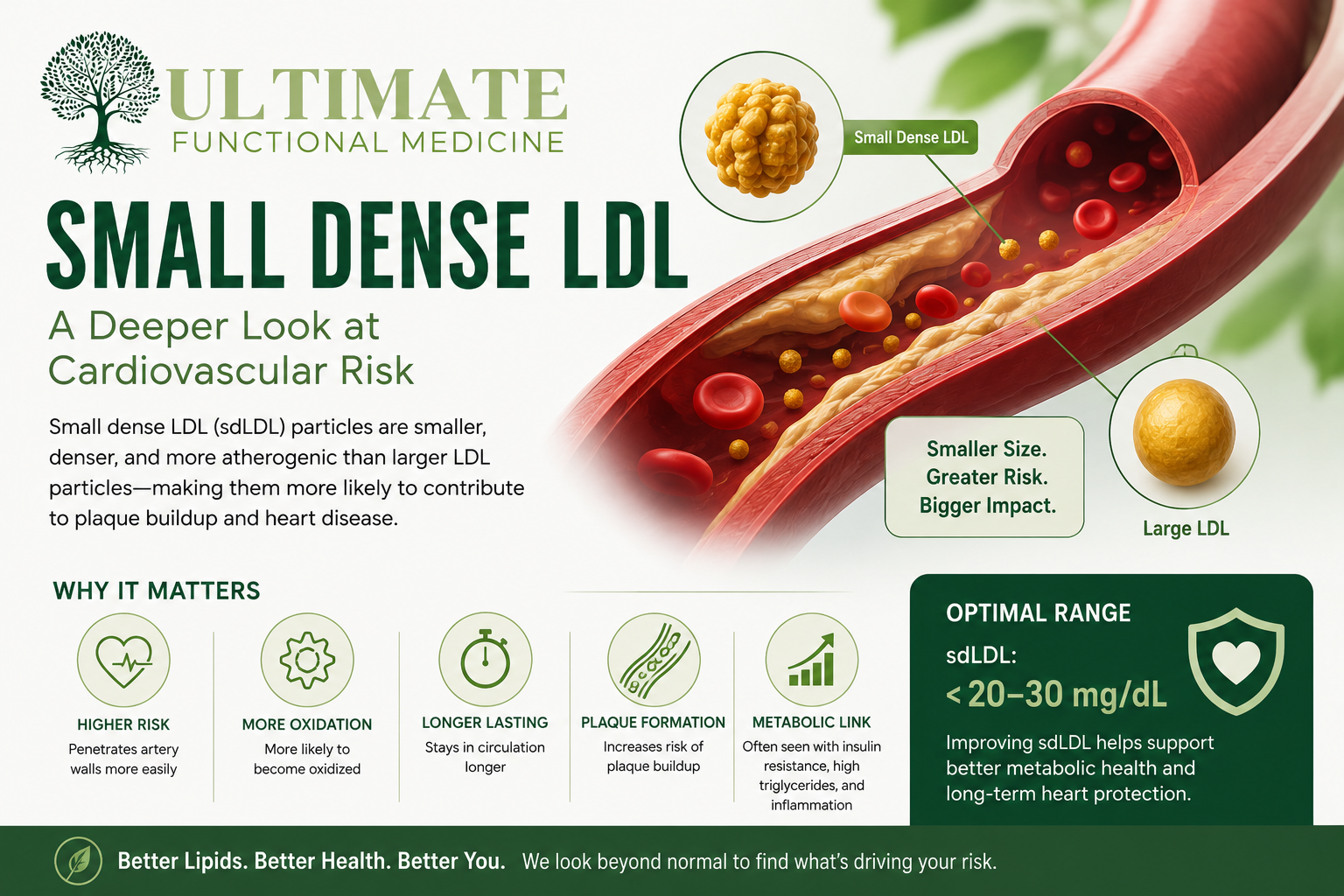
Small dense LDL (sdLDL) is a subtype of low-density lipoprotein particles that are smaller, heavier, and more likely to contribute to cardiovascular disease than larger, buoyant LDL particles. While traditional LDL cholesterol (LDL-C) testing measures the amount of cholesterol carried within LDL particles, it does not evaluate the size or quality of those particles.
Not all LDL particles behave the same way in the body. sdLDL particles are considered more atherogenic, meaning they are more likely to promote plaque buildup within the arteries. Their small size allows them to more easily penetrate the arterial wall, where they can become oxidized and trigger inflammation.
Compared to larger LDL particles, small dense LDL particles are more likely to:
Penetrate the lining of blood vessels
Undergo oxidation and inflammatory damage
Remain in circulation longer
Contribute to plaque formation and arterial narrowing
Because of these characteristics, elevated sdLDL levels are strongly associated with increased cardiovascular disease risk, even in individuals whose standard LDL cholesterol levels appear normal.
Why Test for sdLDL?
Testing sdLDL provides a more advanced assessment of cardiovascular and metabolic health than a standard lipid panel alone. Many individuals with normal LDL-C may still have elevated cardiovascular risk due to a high concentration of small dense LDL particles.
sdLDL testing may help identify:
Residual Cardiovascular Risk
Some patients continue to develop plaque buildup or cardiovascular disease despite having “normal” cholesterol numbers. sdLDL testing can uncover hidden risk that may not appear on routine labs.
Insulin Resistance and Metabolic Syndrome
Elevated sdLDL is strongly linked to insulin resistance, prediabetes, metabolic syndrome, and type 2 diabetes. It is commonly seen in individuals with elevated blood sugar, abdominal weight gain, and chronic inflammation.
Atherogenic Dyslipidemia
This pattern often includes:
High triglycerides
Low HDL cholesterol
Elevated ApoB
Increased sdLDL particles
Together, these findings create a more inflammatory and plaque-promoting lipid profile.
Early Cardiovascular Disease Risk
sdLDL may help identify cardiovascular risk before major abnormalities appear on a traditional cholesterol panel.
Response to Lifestyle and Treatment Interventions
Monitoring sdLDL over time can help evaluate whether nutrition, exercise, weight loss, or therapeutic interventions are improving lipoprotein quality and metabolic health.
Clinical Significance of High sdLDL Levels
Elevated sdLDL levels are generally considered above approximately 30–40 mg/dL, although ranges may vary depending on the laboratory method used.
High sdLDL levels are commonly associated with:
Insulin resistance
Type 2 diabetes
Elevated triglycerides
Low HDL cholesterol
Obesity and visceral fat accumulation
Chronic inflammation
Sedentary lifestyle
Diets high in refined carbohydrates and processed foods
When sdLDL levels are elevated, the body is often in a more inflammatory and oxidative state. These particles are more susceptible to oxidation, which contributes to endothelial dysfunction, plaque development, and accelerated atherosclerosis.
Importantly, individuals may still have “normal” LDL cholesterol while carrying a high burden of small dense LDL particles.
What Do Low sdLDL Levels Mean?
Lower sdLDL levels are generally considered favorable and often reflect healthier lipid metabolism and improved metabolic function.
Levels below approximately 20–30 mg/dL are commonly associated with:
Better insulin sensitivity
Lower inflammation
Healthier triglyceride and HDL balance
Reduced cardiovascular risk
A predominance of larger, less harmful LDL particles
Lower sdLDL levels often indicate improved lipoprotein quality rather than simply lower cholesterol quantity.
Functional Medicine Perspective on sdLDL
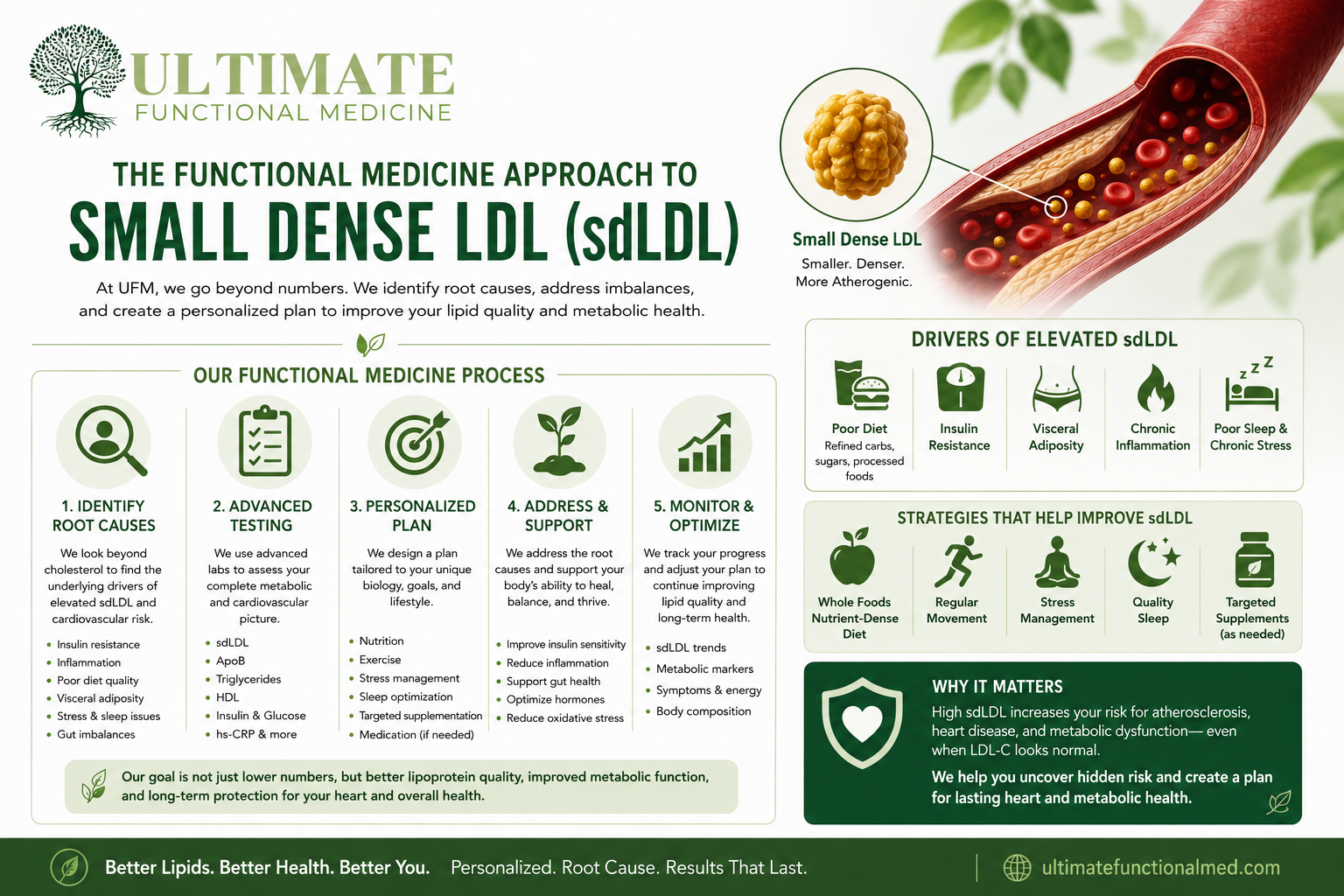
From a functional medicine perspective, elevated sdLDL is often viewed as a downstream marker of metabolic dysfunction rather than simply a cholesterol problem.
Common root contributors may include:
Insulin resistance
Excess sugar and refined carbohydrate intake
Chronic inflammation
Poor gut health
Sedentary lifestyle
Visceral adiposity
Sleep dysfunction
Chronic stress
Rather than focusing solely on lowering cholesterol numbers, a functional medicine approach aims to improve overall metabolic health and reduce the inflammatory environment driving sdLDL formation.
Strategies that may help improve sdLDL patterns include:
Reducing refined carbohydrates and added sugars
Increasing fiber-rich whole foods
Supporting healthy blood sugar regulation
Improving body composition and visceral fat reduction
Increasing physical activity
Optimizing sleep and stress management
Supporting inflammation reduction
sdLDL Should Not Be Interpreted Alone
sdLDL is most valuable when evaluated alongside other cardiovascular and metabolic markers, including:
Triglycerides
HDL cholesterol
ApoB
Fasting insulin
Hemoglobin A1c
hs-CRP
Glucose markers
Looking at the complete metabolic picture provides a more accurate understanding of cardiovascular risk and underlying metabolic health.
Optimal Range for sdLDL
Optimal sdLDL Range:
Less than 20–30 mg/dL
Maintaining lower sdLDL levels is generally associated with healthier lipid distribution, improved metabolic balance, and lower cardiovascular risk.
Final Thoughts
Small dense LDL offers a deeper understanding of cardiovascular risk beyond standard cholesterol testing. Elevated sdLDL may signal underlying insulin resistance, inflammation, and metabolic dysfunction long before overt cardiovascular disease develops.
By addressing root causes such as blood sugar imbalance, inflammation, nutrition, and lifestyle factors, it is often possible to improve lipoprotein quality and support long-term cardiovascular health.
At Ultimate Functional Medicine, we take a comprehensive approach to cardiovascular and metabolic wellness by evaluating advanced biomarkers and identifying the underlying factors contributing to disease risk.
Join a New Model of Medicine
We created Ultimate Functional Medicine because we believe you deserve more than symptom suppression.
You deserve answers.
You deserve clarity.
You deserve a care team that treats you like a whole person—not just a case file.
If you’re tired of feeling dismissed or stuck...
If you’re ready to get to the root of what’s going on...
If you want a personalized, empowering path to healing...
Then we invite you to step into this new model of medicine with us.
This isn’t alternative. It’s advanced.
It’s not fringe—it’s foundational.
And it just might be the approach you’ve been looking for all along.
📞 Ready to get started?
Book your Root Cause Discovery Call and let’s explore how these three pillars can support your healing journey.
