
Understanding Uric Acid: More Than Just a Marker for Gout
At Ultimate Functional Medicine, we believe healing isn’t about chasing symptoms—it’s about creating deep, lasting transformation. These are the three pillars that guide everything we do.
Understanding Uric Acid: More Than Just a Marker for Gout
What Is Uric Acid?
Uric acid is a natural waste product formed when the body breaks down purines, compounds found in your body’s cells and in foods such as red meat, organ meats, seafood, and alcohol. Most uric acid is produced in the liver and then filtered through the kidneys and digestive tract for elimination.
Although uric acid is commonly associated with gout, its role in the body is much more complex. At healthy levels, uric acid acts as an antioxidant, helping protect cells from oxidative damage caused by free radicals. However, when uric acid levels become elevated, the body may struggle to eliminate it efficiently. This can lead to the formation of uric acid crystals in the joints and tissues, contributing to inflammation, pain, and metabolic dysfunction.
Emerging research also suggests that elevated uric acid levels may play a role in cardiovascular disease, insulin resistance, and chronic inflammation, making it an important marker for overall wellness and metabolic health.

Why Is Uric Acid Testing Important?
Testing uric acid levels provides valuable insight into metabolic function, kidney health, and inflammatory burden. While it is often used to evaluate gout, elevated uric acid can also point to broader underlying health concerns.
Healthcare providers may recommend uric acid testing for individuals experiencing:
Joint pain, swelling, or suspected gout
Kidney dysfunction or kidney stones
High blood pressure
Insulin resistance or metabolic syndrome
Chronic inflammation or unexplained fatigue
Cardiovascular risk factors
Diets high in purine-rich foods or alcohol consumption
In functional and integrative medicine, uric acid is viewed as more than a standalone marker. It can provide insight into how the body is managing inflammation, detoxification, blood sugar regulation, and oxidative stress.

What Can High Uric Acid Levels Mean?
Uric acid levels above approximately 6.8 to 7.0 mg/dL exceed the body’s normal solubility threshold, increasing the risk of crystal formation and inflammation.
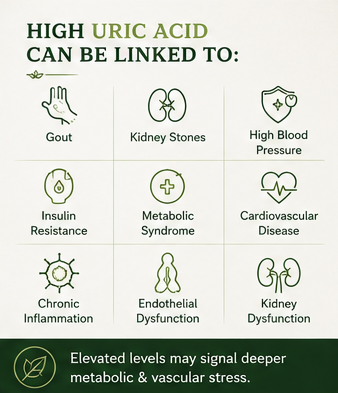
High uric acid levels have been associated with:
Gout and crystal-related joint pain
Kidney stones
Chronic kidney disease
Insulin resistance
Metabolic syndrome
High blood pressure
Cardiovascular disease
Endothelial dysfunction
Obesity and poor metabolic health
Elevated uric acid may also be linked to diets high in fructose, processed foods, alcohol, and sugary beverages. In many cases, it serves as an early warning sign of metabolic stress before more obvious disease develops.
Special Clinical Considerations
Certain medical conditions and life stages may increase uric acid levels, including:
Cancer and Chemotherapy
In oncology settings, rapid cell breakdown during chemotherapy or blood cancers such as leukemia and lymphoma can cause sudden increases in uric acid. This condition, known as tumor lysis syndrome, can place significant stress on the kidneys and requires careful monitoring.
Pregnancy
Elevated uric acid levels during pregnancy may be associated with preeclampsia or eclampsia, conditions involving high blood pressure and vascular dysfunction that can become dangerous if left untreated.
Postmenopausal Women
After menopause, women may experience rising uric acid levels due to reduced estrogen levels, which normally help support uric acid excretion.
What Can Low Uric Acid Levels Mean?
Low uric acid levels are less common but can still provide important clinical insight. Levels below approximately 3.5 mg/dL may indicate:
Reduced antioxidant capacity
Liver dysfunction
Malnutrition
Chronic illness
Certain genetic conditions
Excessive renal excretion
Medication-related effects
In some individuals, very low uric acid levels may reflect reduced physiologic resilience or impaired nutrient status.
Understanding the Root Cause of Elevated Uric Acid
High uric acid should not be viewed in isolation. Instead, it should be evaluated within the context of overall metabolic and kidney health.
Common contributors to elevated uric acid include:
Insulin resistance
High fructose intake
Excess alcohol consumption
Dehydration
Kidney dysfunction
Obesity
Chronic inflammation
Certain medications
Some medications that may increase uric acid levels include:
Diuretics
Low-dose aspirin
Niacin
Other medications may help lower uric acid levels, including:
Losartan
Fenofibrate
In some cases, a 24-hour urine uric acid test may help determine whether the body is overproducing uric acid or failing to excrete it efficiently.
Functional Medicine Approach to Uric Acid
In functional medicine, the goal is not simply to lower uric acid numbers but to address the underlying metabolic imbalances contributing to elevation.
Treatment strategies may include:
Improving insulin sensitivity
Supporting kidney function
Increasing hydration
Reducing processed sugars and fructose
Limiting alcohol intake
Supporting healthy weight management
Addressing inflammation and oxidative stress
Optimizing nutrition and gut health
Tracking uric acid trends over time can provide valuable insight into overall metabolic health and response to treatment interventions.

Optimal Uric Acid Ranges
While reference ranges may vary slightly between laboratories, many functional medicine practitioners consider the following ranges optimal:
Men
Approximately 4.0–6.5 mg/dL
Women
Approximately 3.5–5.5 mg/dL
Maintaining uric acid within an optimal range may help support healthy metabolism, cardiovascular wellness, and reduced inflammatory burden.
Final Thoughts
Uric acid is far more than a gout marker. It can serve as an important window into metabolic health, inflammation, kidney function, and cardiovascular risk. Elevated levels may indicate deeper underlying imbalances that deserve attention before more significant health problems develop.
A comprehensive evaluation that includes lifestyle, nutrition, metabolic health, and kidney function can help identify the root causes of abnormal uric acid levels and guide a personalized treatment plan focused on long-term wellness.
Join a New Model of Medicine
We created Ultimate Functional Medicine because we believe you deserve more than symptom suppression.
You deserve answers.
You deserve clarity.
You deserve a care team that treats you like a whole person—not just a case file.
If you’re tired of feeling dismissed or stuck...
If you’re ready to get to the root of what’s going on...
If you want a personalized, empowering path to healing...
Then we invite you to step into this new model of medicine with us.
This isn’t alternative. It’s advanced.
It’s not fringe—it’s foundational.
And it just might be the approach you’ve been looking for all along.
📞 Ready to get started?
Book your Root Cause Discovery Call and let’s explore how these three pillars can support your healing journey.
